
Overview
What Mount St. Helens is
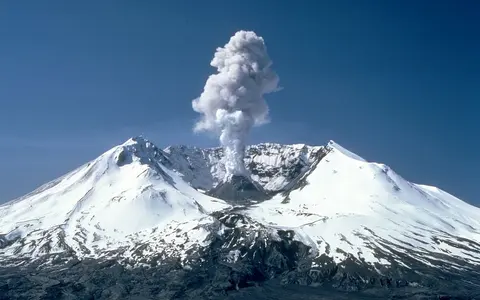
Mount St. Helens is a volcano in the Cascade Range of the Pacific Northwest. Its current profile records flank collapse, explosive eruption, and later dome-building activity.
The page belongs in the volcano archive because crater form, blast deposits, debris fans, and lava dome growth are all visible parts of one volcanic system.
Landform
Crater breach, avalanche surface, and dome
The north-facing breach and hummocky debris-avalanche terrain show how the cone changed during collapse. Inside the crater, lava dome growth records renewed eruption after the main failure.
Crater
Open summit basin
The breached crater exposes the mountain's disrupted interior.
Apron
Debris-avalanche deposits
Collapsed material spread across the surrounding lowlands.
Arc
Cascade setting
The volcano belongs to a chain of subduction-related peaks.