Reference Edition
Field Reference for Natural PlacesGeography Atlas
Volcano Record

Mount Etna

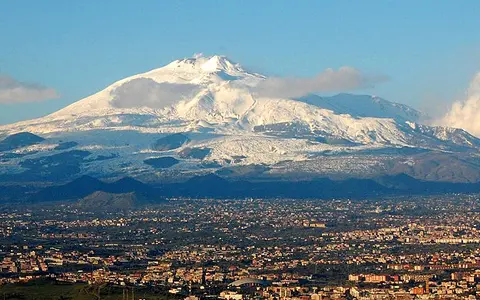
Mount Etna is an active Sicilian stratovolcano where summit craters, flank vents, lava fields, and ash deposits build a large volcanic mountain above the Mediterranean margin.

Why This Record Matters

A volcano shaped by vents and lava fields

Etna is a key volcano record because its landform includes both summit activity and extensive flank eruptions.

TypeActive stratovolcano

A complex cone with repeated eruptions.

SettingSicily

The volcano rises near the Mediterranean plate boundary zone.

LandformSummit and flank vents

Multiple vent areas shape the mountain.

MaterialsLava and ash

Flows and deposits build the slopes.

Overview

What Mount Etna is

Mount Etna is one of Europe's most prominent active volcanoes, with a broad volcanic edifice built by summit and flank eruptions.

Its physical geography is defined by lava flows, ash deposits, crater complexes, and the contrast between high volcanic slopes and surrounding coastal lowlands.

Structure

Crater complexes and flank vents

Etna is not organized around a single simple crater. Flank vents and lava fields show how eruptions can build and modify many parts of a volcanic mountain.

Summit

Crater complex

Upper vents mark the active volcanic core.

Flanks

Lava-field surfaces

Flows extend down the mountain slopes.

Region

Mediterranean setting

Etna belongs to a complex plate-margin zone.