Reference Edition
Field Reference for Natural PlacesGeography Atlas
Volcano Record

Kilauea

Kilauea is a Hawaiian shield volcano shaped by broad basaltic slopes, summit caldera structure, rift zones, lava flows, and coastal lava plains.

Why This Record Matters

A highly legible shield-volcano system

Kilauea pairs with Mauna Loa by showing how rift-zone eruptions and basaltic lava build and reshape Hawaiian terrain.

TypeShield volcano

A broad volcano built mainly by basalt lava.

SettingHawaii

The volcano belongs to an ocean-island chain.

LandformCaldera and rift zones

Summit collapse and flank rifts organize eruption pathways.

MaterialsBasalt lava

Fluid flows create broad volcanic surfaces.

Overview

What Kilauea is

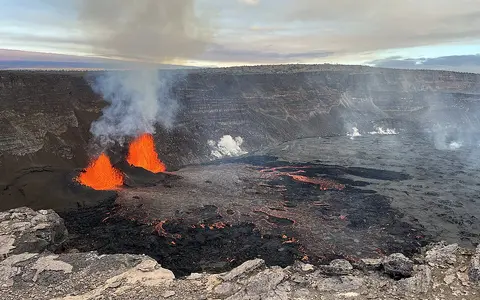
Kilauea is one of Hawaii's active shield volcanoes, with a summit caldera and rift zones that guide lava toward lower slopes and coastal plains.

Its record emphasizes lava-flow geography rather than steep cone building.

Shield Form

Caldera, rifts, and lava plains

Rift zones focus eruptions along linear corridors. Basalt lava spreads across broad surfaces and can extend toward the coast.

Summit

Caldera structure

Collapse and vent activity shape the upper volcano.

Flanks

Rift-zone flow

Lava moves through long eruption corridors.

Island

Terrain growth

New lava adds to the volcanic island surface.