.jpg)
What the Mesoamerican Barrier Reef is
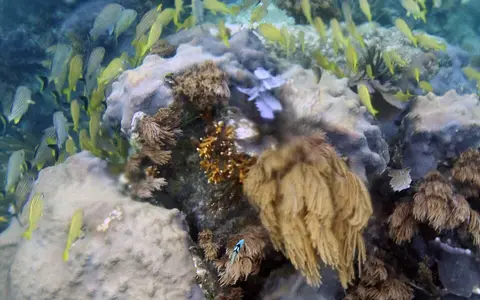
The Mesoamerican Barrier Reef is a connected reef province, not a uniform reef line. Across more than 1,000 kilometers of western Caribbean coastline, it includes barrier reefs, fringing reefs, patch reefs, reef flats, fore-reef slopes, shelf lagoons, atolls, cayes, seagrass banks, mangrove margins, and channels.
Its physical pattern changes from north to south. Along parts of Mexico's Caribbean coast, reefs sit near a limestone peninsula and a narrow shelf. In Belize, the system broadens into a barrier reef, lagoon, caye, and atoll complex. Farther south, reef and island settings connect with the Gulf of Honduras and the Bay Islands.
From the Yucatan coast toward Honduras
The reef system lies on the Caribbean side of Mesoamerica. Its northern sector follows the coast of Quintana Roo in Mexico, including the marine margin of the Yucatan Peninsula. It continues southward along Belize, crosses the small Caribbean frontage of Guatemala, and reaches Honduran waters around the Bay Islands region.
This setting places the reef between coastal lowlands and the open western Caribbean. The Yucatan Channel, the Gulf of Honduras, and the deeper basins of the Caribbean Sea all influence the way water, sediment, and wave energy meet the reef system.
Barrier segments, lagoons, and reef breaks
The name "barrier reef" describes the dominant regional pattern, but the system contains several reef types. Barrier-reef sectors separate lagoonal shelf water from open Caribbean exposure, fringing reefs attach more closely to island or mainland margins, and patch reefs rise within lagoons and shallow banks.
Reef passes and channels are central to the geography. They interrupt reef crests, connect lagoon water to the sea, and create local gradients in current speed, sediment movement, and wave exposure. Low cayes and sand islands mark places where reef and shoal material reaches the shallow marine surface.
Outer reef edges
Reef crests and fore-reef slopes form exposed boundaries between lagoon shelves and open Caribbean water.
Protected shallow basins
Patch reefs, seagrass banks, sand flats, and channels occupy many landward reef areas.
Carbonate platforms
Belize's offshore atolls and many low cayes add island and bank relief to the wider reef province.
A reef province shaped by changing shelf width
The reef's shelf setting is uneven. The northern Yucatan and Mexican Caribbean coast include limestone terrain, submarine springs, coastal lagoons, and sectors where deep water lies relatively close offshore. Belize has a broader shallow shelf with a prominent barrier reef and lagoon, plus offshore atoll platforms beyond the main reef line.
Southward, the system approaches the Gulf of Honduras, where mainland drainage, embayments, and island shelves create a different marine edge. This variation makes the reef province useful as an atlas subject: it records how the same warm sea margin can produce different reef forms over changing seabed relief.
Currents, reef passes, and coastal runoff
Water movement across the reef is governed by Caribbean circulation, trade-wind forcing, tides, waves, and local exchange through reef passes. The Yucatan Current carries water northward along the western Caribbean, while pass openings and lagoon geometry control how quickly protected shelf water mixes with open-sea water.
Mainland runoff is another control, especially near river mouths, coastal wetlands, and the Gulf of Honduras. Freshwater and sediment influence nearshore sectors most strongly, while outer reef slopes, offshore banks, and exposed island margins are more directly shaped by marine water movement and wave energy.
Tropical maritime controls and hurricane exposure
The reef lies in a tropical maritime climate with warm water, seasonal rainfall, and persistent trade-wind influence. Rainfall patterns differ by coast and season, but the broad physical frame is humid, warm, and strongly connected to the annual movement of Caribbean air and water masses.
Hurricanes and tropical storms are part of the reef's geography. Storm waves can break coral rubble loose, shift sand, cut or modify channels, erode cayes, overtop low islands, and reorganize lagoon sediments. These episodic events help shape reef relief and low coastal forms over time.
Western Caribbean and Central American links
The Mesoamerican Barrier Reef connects several named coastal and marine regions: the Mexican Caribbean, Belize's shelf lagoon and offshore atolls, the Gulf of Honduras, and the Bay Islands of Honduras. It also sits near limestone coasts, mangrove wetlands, river mouths, low cayes, and deeper Caribbean basins.
Within the atlas, the record pairs directly with the reef hub and the more local Belize Barrier Reef record. It also contrasts with the continental shelf chain described in the Great Barrier Reef page and the rift-margin setting of the Red Sea Coral Reef.