
Overview
What Victoria Falls is
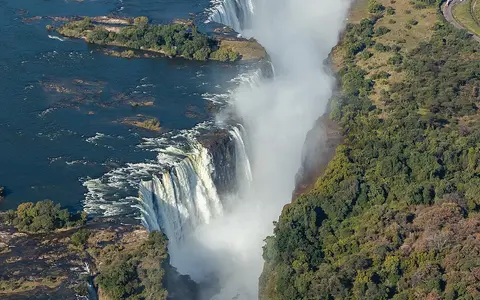
Victoria Falls is a large waterfall on the Zambezi River, set within a plateau landscape where water crosses a bedrock edge and drops into a deep chasm.
The falls are best understood as a waterfall-gorge system rather than only a brink line.
Gorge
Basalt fractures and retreating edges
Fractures in basalt guide the waterfall edge and the downstream gorge pattern. As water exploits these weaknesses, plunge pools and gorge segments preserve the history of retreat.
Brink
Wide river edge
The Zambezi crosses a broad rock lip before dropping.
Spray
Local moisture zone
Mist and spray shape the immediate waterfall margin.
Gorge
Incised downstream route
The river exits through narrow bedrock gorges.
Basin
Zambezi flow context
The waterfall depends on seasonal Zambezi discharge gathered from a large upstream basin. River volume changes the visible form of the falls through the year.