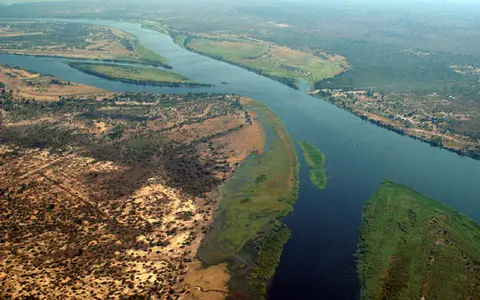

What the Zambezi River is
The Zambezi drains a large part of southern Africa, moving from interior source areas toward the Mozambique Channel of the Indian Ocean.
Its geography combines plateau flow, seasonal floodplain wetlands, dramatic bedrock edge features, reservoir reaches, and a lower river delta.
Plateau headwaters and interior reaches
The upper river gathers water from plateau terrain and tributary basins before moving through broad wetlands and more confined reaches.
This shifting structure makes the Zambezi a useful example of an African river shaped by both low-gradient floodplains and resistant bedrock controls.
Victoria Falls and downstream incision
Victoria Falls marks a major bedrock edge in the river's middle course. Downstream, gorge reaches show how the river cuts through resistant terrain before entering wider reservoir and lowland settings.
Plateau runoff
Interior uplands and tributaries supply water to the upper river.
Falls and gorges
Bedrock controls create abrupt drops and confined channel sections.
Indian Ocean delta
The lower river reaches deltaic plains near the Mozambique Channel.
Seasonal rainfall and floodplain storage
Rainfall seasonality influences discharge, floodplain inundation, and tributary contribution. Wetland and floodplain reaches store water and sediment during high-flow periods.
Reservoirs also shape the modern geography of the river by changing flow timing and creating large standing-water reaches.
Lower river and Indian Ocean connection
Near the coast, the Zambezi spreads into lower river plains and deltaic channels. Sediment delivery, seasonal discharge, and coastal exposure all influence the outlet.
This completes a long physical sequence from plateau source areas to an Indian Ocean margin.