
Overview
What Niagara Falls is
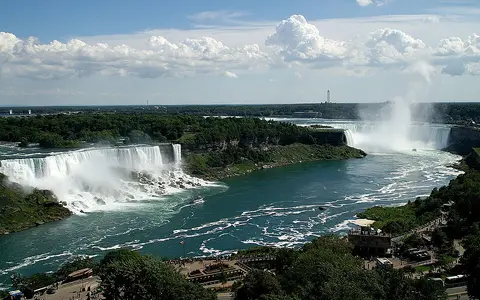
Niagara Falls is formed where the Niagara River crosses a bedrock escarpment between two Great Lakes. The system includes separate falls sections and a downstream gorge.
Its physical record is compact, legible, and strongly tied to post-glacial drainage.
Escarpment
Caprock, plunge pools, and gorge migration
Harder rock at the brink overlies weaker material that can be eroded by turbulent falling water. This contrast helps the waterfall edge retreat upstream over time.
Brink
Layered bedrock
Caprock controls the visible edge.
Gorge
Retreat path
The gorge records earlier waterfall positions.
Drainage
Great Lakes outflow
Large lake storage supports persistent river discharge.
Setting
Freshwater corridor between lakes
The Niagara River is short, but it carries major regional drainage between lakes. That concentration of flow gives the falls their scale.