
What the Tigris-Euphrates system is
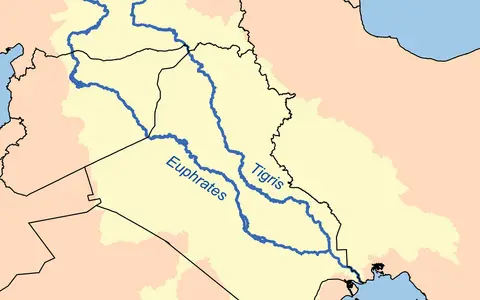
The Tigris and Euphrates are separate rivers through much of their courses, but together they form a linked drainage system across western Asia.
Their physical geography is defined by upland source areas, arid-basin flow, alluvial plains, marshes, and a shared lower outlet.
Mountain headwaters and dry lowlands
Headwaters rise in higher terrain where runoff is greater than in the lowland plains. Downstream, the rivers cross dry country where channel corridors and floodplains stand out sharply from surrounding terrain.
This mountain-to-arid-plain structure makes the system a useful counterpart to the Indus.
Parallel channels and shared outlet
The Tigris and Euphrates run through related lowland settings before converging into the Shatt al-Arab system near the Persian Gulf margin.
Mountain source regions
Upper catchments supply flow that supports long downstream corridors.
Mesopotamian alluvium
Lowland channels, levees, wetlands, and floodplain deposits define the middle and lower basin.
Shatt al-Arab
The connected lower system reaches tidal waters near the Persian Gulf.
Wetlands in an arid-basin setting
Lower-basin marshes show how river water, sediment, and low relief can create extensive wetland landscapes even within a dry regional climate.
These marshes are central to the system's physical identity and outlet transition.
Approach to the Persian Gulf
The Shatt al-Arab and nearby lowlands form the shared downstream connection between the paired rivers and the Persian Gulf.
This outlet completes the system's sequence from mountain source areas through arid alluvial plains to tidal lowlands.