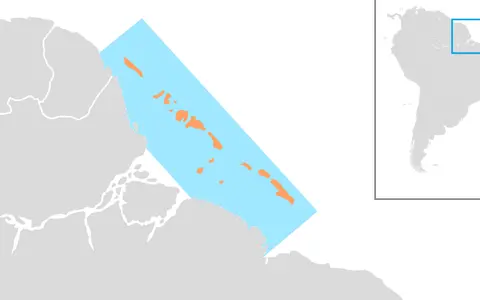

What the Amazon Reef is
The Amazon Reef is not a bright, shallow barrier reef at the shoreline. It is a mostly submerged outer-shelf system made of carbonate buildups, rhodolith fields, rocky or consolidated hard bottoms, and reef-like relief developed below the river plume and along the margin of the Amazon shelf.
In physical geography terms, the record is defined by the meeting of two landscapes: the vast low-gradient Amazon drainage basin and the equatorial Atlantic continental margin. The river supplies freshwater and fine sediment to the shelf, while older carbonate surfaces and living calcareous algae, corals, sponges, and other benthic organisms occupy deeper, clearer, and more stable parts of the seabed.
Off northern Brazil and the Amazon mouth
The reef system lies offshore from northern Brazil, east and southeast of the Amazon River mouth and the Para estuary complex. Published descriptions place it on the outer Amazon shelf between the French Guiana-Brazil border region and the shelf off Maranhao, with better-developed reef sectors away from the most sediment-loaded central mouth.
This location puts the Amazon Reef between two marine provinces. To the northwest are the Guianas and Caribbean-facing tropical Atlantic waters. To the southeast is the Brazilian equatorial margin, where shelf geometry and clearer marine water allow more carbonate development than would be expected directly in front of the river's mud-dominated outlet.
Outer shelf relief below turbid surface water
The Amazon shelf is broad, muddy, and strongly shaped by river discharge, tides, waves, and coastal currents. The reef occurs mainly where the seabed becomes harder and more irregular on the outer shelf, beyond the shallowest mud belt but still under the influence of the Amazon plume.
The system is discontinuous. It includes carbonate pavements, low-relief ridges, rhodolith beds, and deeper reef-like outcrops rather than a single continuous crest. Depth, substrate, and plume cover divide the shelf into sectors, with the central mouth area more sediment dominated and the northern and southern sectors more favorable to hard-bottom development.
Deeper reef belt
Much of the mapped reef lies in mesophotic depths where light is reduced but carbonate surfaces still occur.
Surface-water cover
Freshwater and suspended sediment spread above the shelf, affecting light, salinity, nutrients, and water clarity.
Broken seabed relief
Carbonate mounds, pavements, rhodolith beds, and consolidated outcrops create the physical base of the record.
A lowland river beside a submerged shelf landscape
The adjacent mainland is a low coastal and deltaic region rather than a steep rocky shore. The Amazon approaches the Atlantic through broad floodplains, tidal channels, islands, estuaries, and mud-rich coastal waters. That lowland setting sends large amounts of fine material across the inner and middle shelf.
Offshore, the most important relief is underwater. Shelf gradients, buried older surfaces, carbonate buildups, and patchy hard grounds form a subdued but significant seabed landscape. The contrast between muddy inner-shelf deposits and harder outer-shelf carbonate relief is the central terrain pattern of the Amazon Reef.
Freshwater discharge, plume spread, and current drift
Hydrology dominates the Amazon Reef record. The Amazon River delivers an immense flow of freshwater, suspended sediment, and dissolved material to the Atlantic. The resulting plume spreads over the shelf as a surface layer, changing salinity, light penetration, nutrient levels, and sediment conditions above the reef.
The North Brazil Current and related equatorial circulation move water northwestward along the margin for much of the year, while tides and seasonal winds alter local mixing. This circulation links the reef to the Guiana shelf and the wider tropical Atlantic, but it also keeps the system physically different from clear-water shelf reefs such as the Belize Barrier Reef or the Florida Reef.
Equatorial rainfall and seasonal plume controls
The reef lies in an equatorial climate setting controlled by high rainfall over the Amazon basin, warm Atlantic waters, seasonal shifts in the Intertropical Convergence Zone, and the annual rise and fall of river discharge. The river's seasonal flood pulse changes the thickness and reach of the plume over the shelf.
Unlike many reef records in the atlas, climate is felt here less through coastal aridity or hurricane corridors and more through basin-scale rainfall. Rain over the Andes and Amazon lowlands eventually appears offshore as freshwater, suspended sediment, and plume stratification above the reef system.
Amazon basin to equatorial Atlantic margin
The Amazon Reef is best read beside the Amazon River record because its marine setting is inseparable from the river's discharge, sediment load, and lowland outlet. The reef also belongs with the reef hub as a plume-influenced outer-shelf example that expands the atlas beyond clear-water barrier and fringing systems.
Regionally, the reef sits between South America's largest river basin and the westward-flowing tropical Atlantic. That position makes it a record of margins: freshwater to saltwater, muddy shelf to carbonate seabed, Brazilian coast to Guiana shelf, and river-shaped surface water to deeper marine hard-bottom terrain.