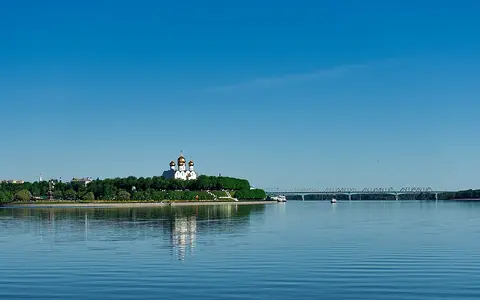

What the Volga River is
The Volga rises in the Valdai Hills and flows generally east and south across the Russian interior before reaching the Caspian Sea.
It is best understood as an interior drainage system, with its outlet entering a landlocked water body rather than the open ocean.
Upland source and lowland course
The upper river begins in modest uplands, then gathers tributaries across a broad plain. Downstream reaches are shaped by low gradients, wide valleys, reservoirs, and floodplain margins.
This gives the Volga a long interior-basin profile distinct from shorter mountain-to-sea rivers.
A wide Russian drainage network
Major tributaries connect forest, steppe-margin, and upland catchments to the main channel, helping assemble flow across a large part of European Russia.
Valdai Hills source
Upper reaches begin in low uplands northwest of the main downstream plain.
Broad tributary basin
The river gathers flow from an expansive interior drainage network.
Caspian delta
The lower river spreads into a delta on the northern Caspian margin.
Snowmelt and regulated reaches
Snowmelt, seasonal precipitation, and reservoir regulation influence flow patterns along the Volga. These controls affect how water and sediment move through the basin.
The regulated character of many reaches is part of the modern river geography and sits alongside the natural basin form.
Entering the Caspian Sea
The Volga delta marks the river's transition into the Caspian Sea, where distributaries, wetlands, sediment, and shallow coastal water interact.
Because the Caspian is landlocked, the Volga is a useful atlas example of a major river ending in an inland basin.