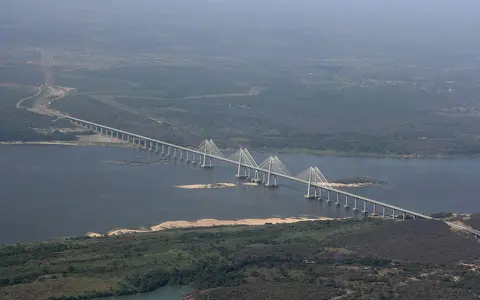

What the Orinoco River is
The Orinoco forms a major drainage system of northern South America, flowing in a broad arc before entering the Atlantic through a delta.
Its physical geography is shaped by shield-fed tributaries, seasonal rainfall, lowland floodplains, and deltaic distributaries.
Shield margins and llanos lowlands
The basin gathers water from upland margins and broad savanna plains. Low relief in the llanos allows seasonal inundation to spread across floodplain wetlands.
This gives the Orinoco a distinct flood-pulse character within the river atlas.
Channels from uplands and plains
Tributaries connect upland catchments, savanna wetlands, and the main river, producing a varied network of blackwater, whitewater, and lowland channels.
Southern upland margins
Source and tributary areas connect the river to shield and highland terrain.
Llanos floodplains
Seasonal inundation spreads across broad savanna lowlands.
Atlantic delta
Distributaries and tidal lowlands mark the river's coastal transition.
Rainfall pulses and wetland expansion
Wet-season rainfall expands channels, wetlands, and floodplain storage. Dry-season contraction exposes the strong seasonal rhythm of the basin.
This hydrologic pulse is central to how the river shapes the llanos landscape.
Distributaries toward the Atlantic
The lower Orinoco reaches a broad delta where distributary channels, sediment, tides, wetlands, and coastal waters interact.
This outlet gives the river a clear Atlantic endpoint while preserving its lowland floodplain identity.