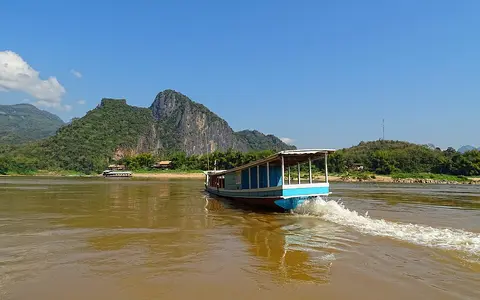

What the Mekong River is
The Mekong rises in high terrain and flows southward through China and mainland Southeast Asia before spreading into lowland distributaries in Vietnam.
Its geography is best read as a sequence of steep upper reaches, controlled valley corridors, tributary junctions, floodplain wetlands, and deltaic outlet channels.
Plateau sources and lower-basin plains
Upper reaches begin in high plateau country, where relief and snowmelt-influenced runoff feed the river. Farther downstream, tributaries drain monsoon uplands and lowland plains.
The basin narrows and widens repeatedly, so the river alternates between confined valley reaches and broad floodplain settings.
Seasonal flow and Tonle Sap storage
Wet-season flow drives much of the lower Mekong's physical structure. Rising water can back up into the Tonle Sap system, expanding seasonal storage before water returns toward the main river and delta.
High plateau source
Upper-basin relief gives the river a strong mountain-to-lowland transition.
Tonle Sap connection
Seasonal water exchange links the river to a major flood-pulse lake system.
Delta distributaries
The lower Mekong spreads through channels, wetlands, and coastal lowlands.
Upland runoff and lowland confluences
Tributaries from Laos, Thailand, Cambodia, Vietnam, and adjacent uplands add water, sediment, and seasonal variation to the main channel.
The pattern of confluences helps divide the Mekong into upper, middle, and lower basin sectors.
Meeting the South China Sea
The lower Mekong enters the coast through a distributary delta shaped by river sediment, tidal influence, seasonal discharge, and low coastal relief.
This delta completes the basin's long passage from plateau headwaters to tropical lowland outlet.